
20.09.2026 - Testowa
Industrial Style in an Apartment – How to Decorate the Interior?
What Is Industrial Style and Where Did It Originate?
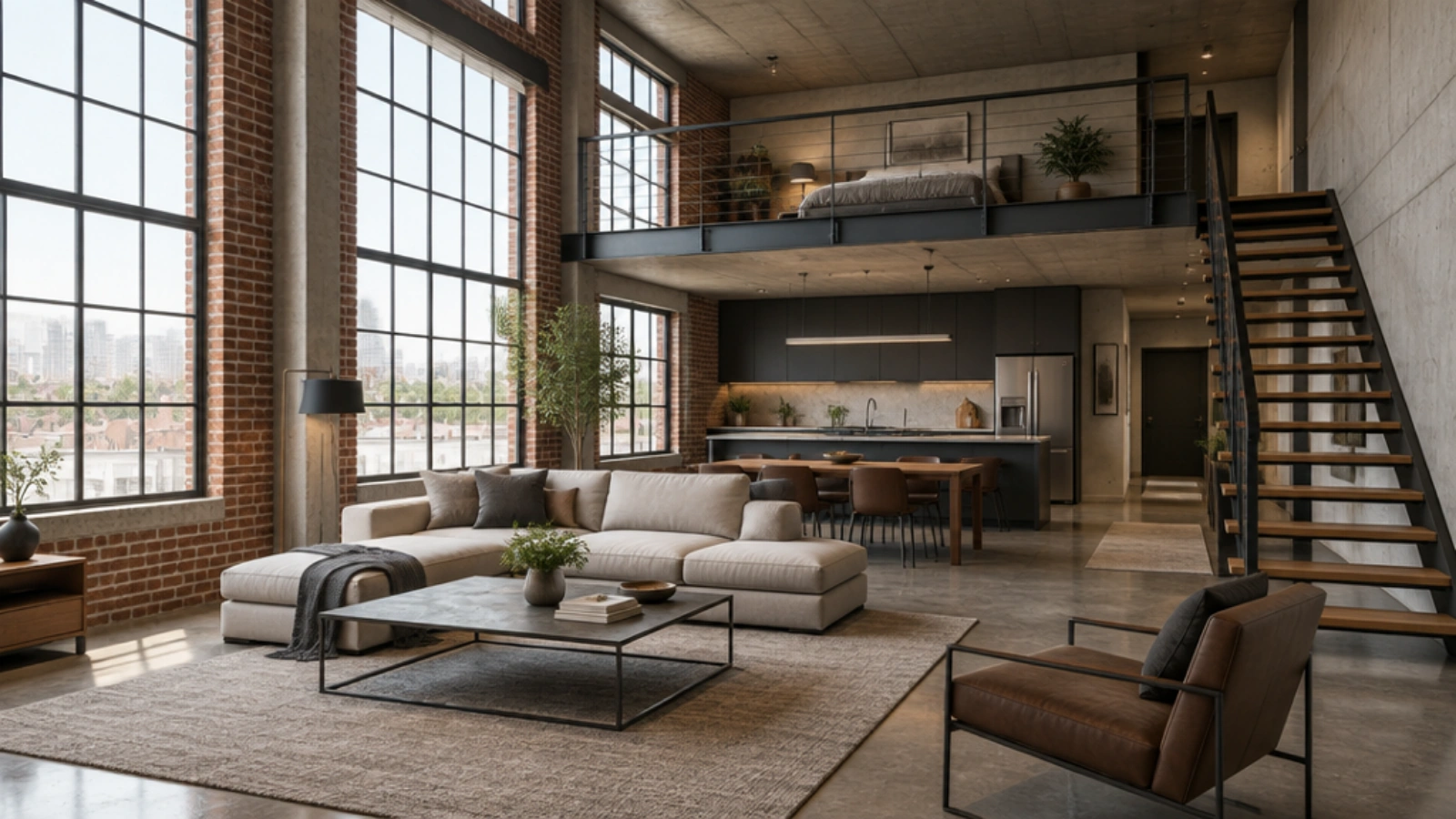
Industrial interior design draws inspiration from old factories, warehouses, and industrial plants. Rather than concealing utility pipes and structural elements, it exposes them as decorative highlights. Hence the hallmarks: unpolished walls, surface-mounted wiring, and furniture crafted to look like repurposed industrial machinery.
The style originated in American cities during the 1960s. Following an economic downturn, industrial districts stood abandoned, and artists short on funds moved into vacant manufacturing halls. Because they skipped formal renovations, concrete ceilings and bare cables remained exposed. Necessity evolved into a design trend, and loft living spread across Europe and into Poland.
Today, "loft style" is used interchangeably with "industrial style," though technically a loft refers specifically to a converted post-industrial building. As true converted factories are rare in Poland, the style adapted seamlessly to standard modern apartments.
Characteristics of Industrial Style
Industrial interiors feature several recognizable constants:
- Open-plan spaces without unnecessary partition walls, often incorporating an open kitchen/living area,
- Raw, unprocessed materials left unfinished,
- Exposed utilities, surface-mounted conduits, and visible structural beams,
- A neutral color palette centered around shades of gray, white, and black,
- Generous glazing and maximum daylight,
- Minimalist furniture and accessories, following the less is more philosophy,
- Pairing steel with natural wood in furniture and built-in fixtures.
The final rule is essential. Unaccompanied concrete and metal create cold, uncomfortable spaces; wood, leather, and textiles are just as important as raw surfaces for balance.
Materials: The Foundation of Industrial Interiors
Concrete forms the bedrock. While original, unfinished structural concrete is ideal, simulated finishes work wonderfully in apartments: microcement, architectural concrete panels, or decorative lime plasters. Because these finishes can cost more than basic paint and drywall, factor them into your budget when calculating home finishing costs.
The second column is metal. Powder-coated matte black steel and cast iron excel in window frames, furniture structures, and light fixtures. Transparent glass enclosed in black metal loft doors complements the look.
Brick can be red, brown, or white, depending on how warm you want the interior to feel. Choose solid, natural wood with exposed grain and matte finishes; high-gloss coatings ruin the effect. Rough leather, textured upholstery, and natural fabrics complete the palette.
Industrial Interior Color Palettes
Gray forms the primary foundation, ranging from light cool tones to deep graphite and anthracite. Matte wall finishes are preferred, as glossy surfaces undermine the raw texture. Off-white serves as an ideal secondary color.
Reserve black for architectural accents: window frames, light fixtures, furniture frameworks, and mirror borders. Warmth is introduced through browns, beiges, and terracotta reds found in wood, brickwork, and leather upholstery.
Bold accent colors are allowed but should be used sparingly. Forest green, mustard yellow, or burnt terracotta work well in throw pillows, posters, or an accent armchair. On full walls, they would dilute the raw industrial aesthetic.
Industrial Style Lighting
Natural daylight is the baseline, so windows are left unadorned or fitted with light, minimal fabrics. Artificial lighting relies on fixtures with industrial heritage:
- Metal cage pendant lights, usually in matte black,
- Decorative Edison filament bulbs suspended on exposed cords,
- Spotlight fixtures mounted on ceiling track systems,
- Tripod floor lamps resembling vintage film production gear,
- Swing-arm wall sconces placed beside desks or beds,
- Neon signs or illuminated lettering used as singular focal accents.
Avoid relying solely on a single central ceiling fixture. Layering light sources at varying heights softens cool surfaces and defines functional zones across open spaces.
Industrial Furniture
Industrial furniture emphasizes clean, geometric shapes and exposed framing. A classic combination features a black metal base paired with a solid wood tabletop. Pieces are often substantial, reflecting their origins in workshops and storage depots.
A distinct subcategory involves reclaimed and vintage items. Sideboards displaying aged patina, apothecary cabinets with rows of small drawers, steel shelving units, and pallet coffee tables bring history that off-the-shelf furniture sets cannot replicate. In the living room, a leather sofa—such as a classic tufted Chesterfield—adds timeless texture.
Dining chairs offer a great opportunity to experiment. Grouping diverse vintage chair models around a simple wooden dining table often looks better than a matching set.
Accessories and Decor
Industrial interiors do not tolerate clutter. Opt for a few impactful statement pieces rather than dozens of small trinkets:
- Industrial design prints and graphic posters framed in thin black metal,
- Vintage metal signs and enamel directional plaques,
- Large-format wall clocks with exposed metal gears,
- Concrete planters and minimalist candleholders,
- Storage trunks, wooden crates, and transit boxes repurposed as side tables,
- Statement house plants in simple pots, featuring broad green foliage.
Plants are more vital here than they might seem. Living greenery breaks up the coldness of concrete and metal, thriving well near large windows.
Room-by-Room Industrial Style Guide
Every room requires a slightly tailored approach:
| Room | Walls and Flooring | Furniture and Accents |
|---|---|---|
| Living Room | Cool grays, herringbone wood flooring | Leather sofa, metal coffee tables, framed graphic art |
| Kitchen | Black, gray, or wood cabinet fronts, brick accent wall | Metal barstools, island pendant lights, open shelving |
| Bedroom | Matte white walls, warm wood flooring | Wooden platform bed, textured area rug, black fixtures |
| Bathroom | Concrete-effect walls, brick-style tiling | Solid wood vanity, black-framed mirror, wall sconces |
| Entryway | Darker gray palette, concrete flooring | Pipe clothing rack, crate shoe storage, metal hooks |
| Home Office | Neutral backdrop, one strong accent wall | Wooden desk, leather office chair, swing-arm lamp |
In kitchens and bathrooms, select moisture-resistant materials. Raw concrete near bathtubs or sinks requires protective sealing to prevent water staining over time.
Industrial Style in Small Apartments
High ceilings and floor-to-ceiling windows are luxuries not present in every standard floor plan. In smaller footprints, build industrial flair using targeted accents rather than wall-to-wall installations.
Pick one strong feature piece and keep surrounding elements simple: an exposed brick wall behind the sofa, a concrete splash zone in the kitchen, or black metal frame shelving. Keep remaining walls light gray or off-white. Replace solid partition walls with black steel glass doors to divide functions without blocking light.
How to Combine Industrial Style with Other Aesthetics?
Pure industrial style can feel sterile, so it is frequently blended with warmer design movements. It pairs exceptionally well with Scandinavian interiors, borrowing light woods, wool textiles, and clean lines. Applying Scandinavian elements onto an industrial foundation creates an inviting, balanced space.
Another proven combination pairs raw industrial structures with the serene, natural materials of Asian minimalism. The shared emphasis on simplicity allows the Japandi aesthetic to integrate smoothly with concrete and black metal. Vintage chairs and mid-century modern furniture pieces also blend seamlessly into industrial settings.
Where to Begin Your Interior Project?
Sequence matters, as several industrial design features involve wet work and utility installation that cannot easily be retrofitted later. Surface conduits, microcement, and glass wall frames require planning before painting begins, so include them early when planning your step-by-step apartment finish.
Start with your layout and square footage. Properties with open-plan living zones and large windows—such as those built by J.W. Construction—offer an inherent industrial foundation at the developer-finished stage, meaning you can focus on selecting lighting and surface materials right away.
FAQ – Frequently Asked Questions
What characterizes industrial style?
Industrial style is defined by raw materials, open layouts, and exposing structural elements that other styles conceal—such as pipes, electrical conduits, and support beams. Dominant materials include concrete, brick, black metal, and solid wood set against neutral grays, whites, and blacks.
Are industrial style and loft style the same thing?
In everyday language, both terms are used interchangeably to describe the same aesthetic. Strictly speaking, a loft refers to an apartment located inside a converted industrial building, whereas industrial style can be introduced into any space, including standard modern apartments.
What are the main features of an industrial apartment?
Primary features include open floor plans without unnecessary interior walls, raw unfinished materials, exposed utility lines, expansive windows, and understated furniture choices. These are complemented by industrial lighting fixtures and combinations of steel with natural wood.
What wall colors best suit industrial interiors?
Matte shades of gray (from soft gray to deep graphite and anthracite) and off-white perform best. Stronger accent colors like forest green or terracotta are best reserved for decor accents rather than entire walls.