
11.10.2026 - Testowa
Modern style in an apartment – arrangement principles and inspirations for 2026
What is modern style and where does it originate?
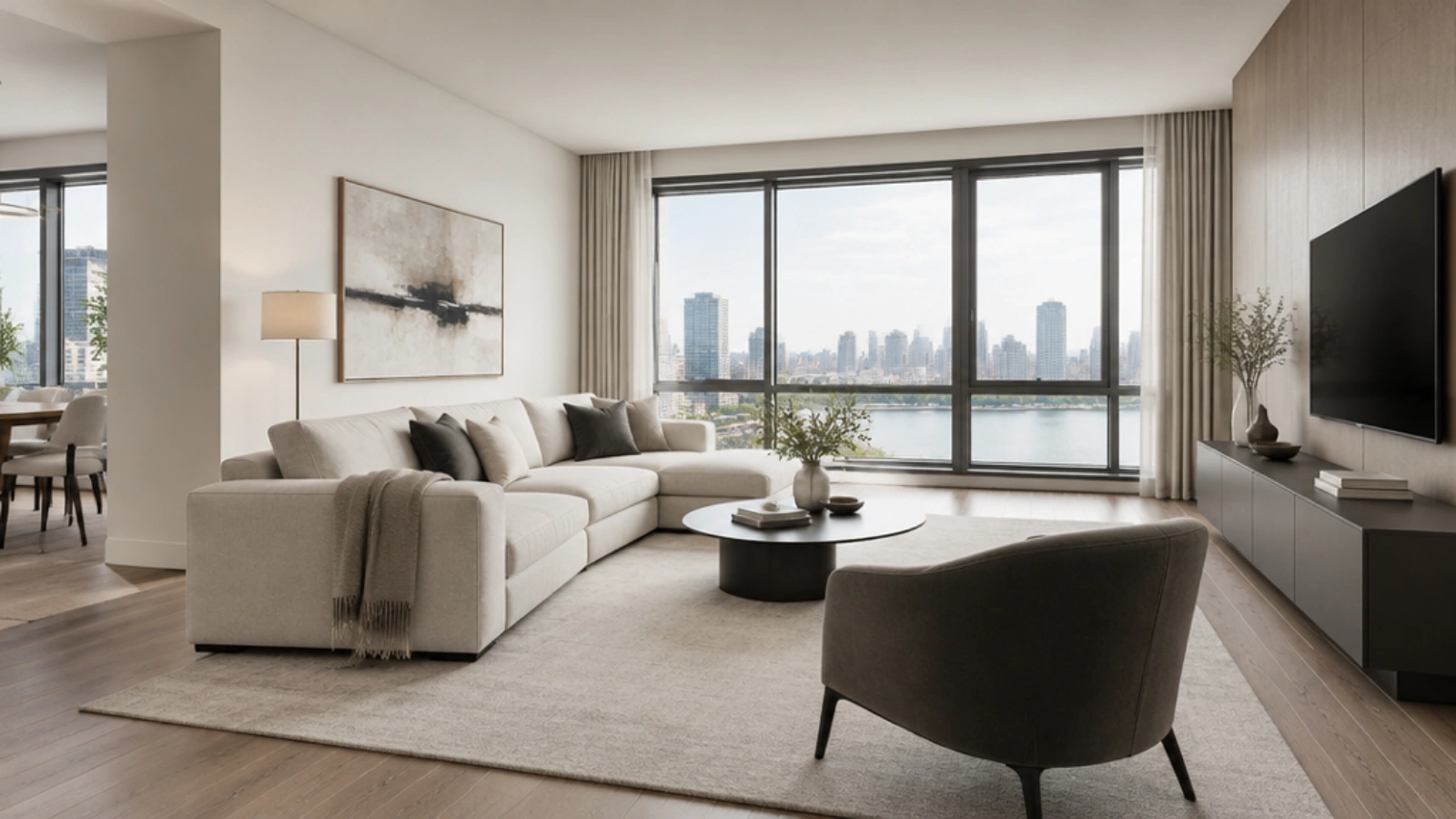
Modern style is an interior design approach based on clean forms, functional layouts, and a limited number of decorations. Every element serves a purpose, and ornamentation appears only where it does not obscure function or impede movement. This creates a sense of spaciousness, even within modest floor plans.
The roots of this aesthetic date back to early 20th-century modernism. Designers back then rejected ornate decorations and established that an object's form must follow its function.
The contemporary version differs from pure minimalism by allowing decorative elements, soft textiles, and colorful accents.
Colors and materials in modern-style apartments
The base consists of white, gray, beige, and graphite. Against such a background, material textures and single color accents stand out clearly. Navy blue, bottle green, or burgundy work best on a sofa, curtains, or an accent armchair rather than across every wall.
Modern apartments rely heavily on:
- Glass
- Steel
- Stone
- Wood
Floors are most commonly finished with natural wooden boards or durable alternatives like vinyl panels or wood-look tiles. Countertops and wall coverings feature natural stone or quartz sintered slabs.
Architectural concrete and black steel are materials shared between modern and industrial styles. Here, however, they are used more sparingly and always alongside smooth, finished surfaces.
The depth of an arrangement comes from contrasting textures. A glossy cabinet front reflects light and visually expands the room, while a matte countertop, velvet, or wool adds warmth and coziness. Every cold, smooth surface needs a soft or textured counterpart nearby.
Furniture and built-in structures in modern interior design
Modern interior design begins with custom built-in furniture. Floor-to-ceiling wardrobes, handleless fronts, and push-to-open mechanisms allow clutter to be hidden away, keeping the space visually clean. Sliding doors and glass partition walls in slim aluminum frames divide functional zones without blocking natural light.
Freestanding furniture with low, clean profiles completes the modern home design. Modular sofas work exceptionally well in living rooms, as they can be reconfigured when living needs change. Low sideboards and coffee tables made of glass, metal, or stone complement the seating setup.
It is better to invest in fewer, higher-quality pieces. A well-designed armchair or side table will survive changing trends and gradually assume the role of an artistic decorative object.
How to light a modern interior?
Lighting in this style serves both functional and aesthetic purposes simultaneously. It is planned across three distinct layers:
- General lighting: recessed ceiling fixtures or track lighting.
- Task lighting: focused light over countertops, dining tables, and reading nooks.
- Accent/Decorative lighting: LED strips integrated inside cabinetry, wall recesses, and under floating cabinets.
This layered layout allows a single space to serve work, cooking, and evening relaxation seamlessy. Furthermore, a uniquely shaped light fixture can double as an artwork or sculpture.
Accessories, textiles, and plants
Accessories should be minimal but high-quality. Great choices for modern interiors include:
- Graphic prints and photography in thin, simple frames.
- Vases and sculptures featuring clean geometric geometry.
- Wall decor made from matte metal.
- Large mirrors that illuminate and visually expand the room.
- Throws, pillows, and rugs with soft, inviting textures.
- Copper or brushed brass accents.
Apply the same rule when choosing plants. One large statement plant makes a much stronger impression than a row of small pots on a windowsill. Monstera, Strelitzia, Dracaena, palm trees, and structural succulents pair best with simple concrete or ceramic planters. A single decorative branch in a tall glass vase can easily replace a multi-flower bouquet.
Modern interior arrangements in individual rooms
While principles remain constant across the entire apartment, every room presents distinct functional demands. Modern interior design must account for room function, square footage, and access to natural light.
| Room | Layout and Built-ins | Furnishings and Details |
|---|---|---|
| Living Room | Zones delineated by a kitchen island or dining table rather than walls. | Modular sofa, coffee table, low-pile rug with a subtle geometric pattern. |
| Kitchen | Smooth fronts, stone or sintered slab countertops, integrated appliances. | Keep only daily essentials on countertops; display fine tableware in a backlit glass cabinet. |
| Bedroom | Wide bed with an upholstered headboard, simple nightstands. | Pendant lamps on long cords, warm beiges and grays softened with muted greens. |
| Bathroom | Walk-in curbless shower with a plain glass panel; freestanding tub for larger spaces. | White, black, and gray palette; single-tone hardware finish; rainfall showerhead. |
| Entryway | Floor-to-ceiling built-in wardrobe, integrated bench seating. | Full-height mirror, decorations kept to an absolute minimum. |
Modern style in a small apartment
Modern style is exceptionally effective in small floor plans because it inherently limits unnecessary items. Light-colored walls, strategically placed mirrors, and reflective surfaces bounce light, making rooms feel larger. Open bookshelf room dividers or glass partitions can replace traditional interior walls. Choose multifunctional, visually light furniture—such as pieces with slender legs or transparent acrylic materials.
Modern apartment style in 2026 – what is changing?
Recent interior designs are moving away from sterile, ultra-minimalist aesthetics toward warmer, softer spaces. These shifts are evident across several design choices:
| Design Element | Moving Away From | Gaining Popularity |
|---|---|---|
| Color Palette | Cool whites and cold grays | Warm beige, caramel, sandy browns, olive green |
| Furniture Shapes | Sharp, rigid edges and heavy silhouettes | Rounded corners, soft curves, lightweight modular pieces |
| Surface Finishes | High-gloss finishes across all cabinetry | Matte textures, natural wood, stone, linen, and velvet |
| Metal Details | Chrome and cold silver finishes | Copper, brushed brass, matte black |
| Technology | Exposed tech devices and visible wiring | Smart home systems seamlessly concealed within cabinetry |
| Decorations | Matching decor sets from a single store line | Curated, individual accents chosen with personal intent |
Rich accents are also entering the color palette through textiles, such as berry pink or raspberry red. Warm wood tones, natural linen, and soft earthy shades are bringing modern interiors closer to the Japandi aesthetic.
Combining modern style with other styles and vintage furniture
A neutral background allows modern style to integrate seamlessly with elements from other aesthetics. The key is moderation along with a cohesive palette of colors and materials.
It pairs easiest with light woods, wool, and linen drawn from Scandinavian design, making the interior feel warmer without sacrificing clean lines.
Classic accents can be introduced through subtly profiled cabinetry fronts paired with smooth stone surfaces. Exposed ceiling beams, distinct wood grains, and handcrafted ceramics bring in a subtle rustic touch.
Treat vintage furniture as accent pieces. An inherited sideboard, a 1960s mid-century chair, or an antique mirror gains fresh life against smooth walls and simple cabinetry, provided you limit yourself to no more than one or two such items per room. Reupholstering vintage seating in a fabric that echoes existing colors ties the look together.
How to plan a modern-style apartment?
Most design elements typical of this style are established during the rough finishing phase, meaning planning begins well before buying furniture.
The overall cost of finishing an apartment in this style is primarily determined by:
- Custom built-in cabinetry
- Natural stone or sintered slab coverings
- Integrated architectural lighting
Finalize these scopes before ordering materials, as late modifications require costly electrical and plumbing re-works.
Coordinating carpenters, electricians, and tilers is often the most demanding part of such projects. Built-in structures must fit down to the millimeter, and lighting points must match the furniture layout. J.W. Construction offers turnkey apartment finishing managed by a single coordinated team, allowing you to move into a finished interior without managing individual contractors yourself.
FAQ – Frequently Asked Questions
What does a modern apartment look like in 2026?
A modern apartment in 2026 is warmer and softer than in previous years. The foundation consists of warm beiges, sand tones, and olive greens. Furniture features rounded edges, and smart technology is discreetly hidden within built-in storage.
What characterizes modern design style?
Modern style is defined by clean lines, functional spatial layouts, neutral color schemes, and restrained decoration. It makes strategic use of glass, steel, stone, and natural wood, paired with multi-layered lighting design.
What are the latest trends in apartment interior design?
Key trends include earthy color palettes, natural materials, curved furniture profiles, and adaptable modular setups. Matte finishes and smart home systems working silently in the background continue to grow in popularity.
How do you decorate an apartment in modern style?
Start with a functional spatial layout and custom cabinetry planning, then design layered lighting over a neutral color base accented by no more than two complementary colors. Select high-quality, simple furniture and limit decorative accessories to a few curated pieces.
How do you mix modern style with vintage furniture?
Use antique or vintage furniture as focal points against a neutral backdrop, keeping to a maximum of two vintage pieces per room. Maintain visual cohesion through shared accent colors or materials, such as updating upholstery to match the room's color scheme.