17.07.2026 - Testowa
Japandi Style – What Makes It Unique and How to Design Your Home
Where Does the Japandi Style Come From?
The name Japandi is a blend of the words Japan and Scandi. The style was born from the observation that these two geographically distant design cultures share surprisingly similar values: a love of simplicity, respect for natural materials, and the belief that interiors should serve people rather than overwhelm them.
The defining characteristics of Japandi include:
- minimalist forms and keeping only truly essential items,
- natural materials as the main decorative feature,
- a muted color palette without bold contrasts,
- low-profile furniture with clean, simple lines,
- embracing empty space as a design element in itself.
Unlike traditional Scandinavian interiors, Japandi is more restrained and sophisticated. There is less white, more earthy tones, less softness, and more texture and intentionality.
Japandi Style – Colors and Materials That Define the Interior
The Japandi color palette is based on soft, neutral shades. Beige, ecru, warm gray, and muted greens dominate the space, while black is used sparingly—for example, in picture frames, lighting fixtures, or metal accents. The overall effect is calm, balanced, and timeless.
Materials play a leading role in Japandi interiors. They largely determine the atmosphere of the space:
- darker wood species such as walnut, oak, and bamboo,
- stone and concrete for walls, countertops, or flooring,
- linen, cotton, and wool for textiles,
- handcrafted ceramic pieces with irregular shapes and matte finishes,
- rice paper and rattan for lighting and decorative accessories.
- Flooring in Japandi interiors is typically dark wood or natural stone.
Not sure how to plan your apartment finishing project step by step? Check out our guide on the blog!
Furniture and Space Planning
Japandi interiors are based on intentional simplicity. Every piece of furniture serves a purpose and is carefully selected. Sofas and armchairs feature low profiles, while coffee tables are typically simple wooden designs or have stone tops. Cabinets and shelving units usually have closed fronts to keep clutter out of sight.
The layout is designed to maximize the flow of light and air. Excess furniture and decorations are avoided. Walls remain mostly empty or are decorated with a single carefully selected piece, such as an ink illustration, a ceramic wall relief, or a branch displayed in a minimalist vase.
Lighting is soft and warm. Lamps with rice paper or rattan shades diffuse gentle light throughout the room. Candles and lanterns reference the Japanese philosophy of wabi-sabi—finding beauty in simplicity and imperfection.
Japandi Style Room by Room
The principles of Japandi work beautifully throughout the entire home. Here's how to apply them in each room.
Japandi Living Room
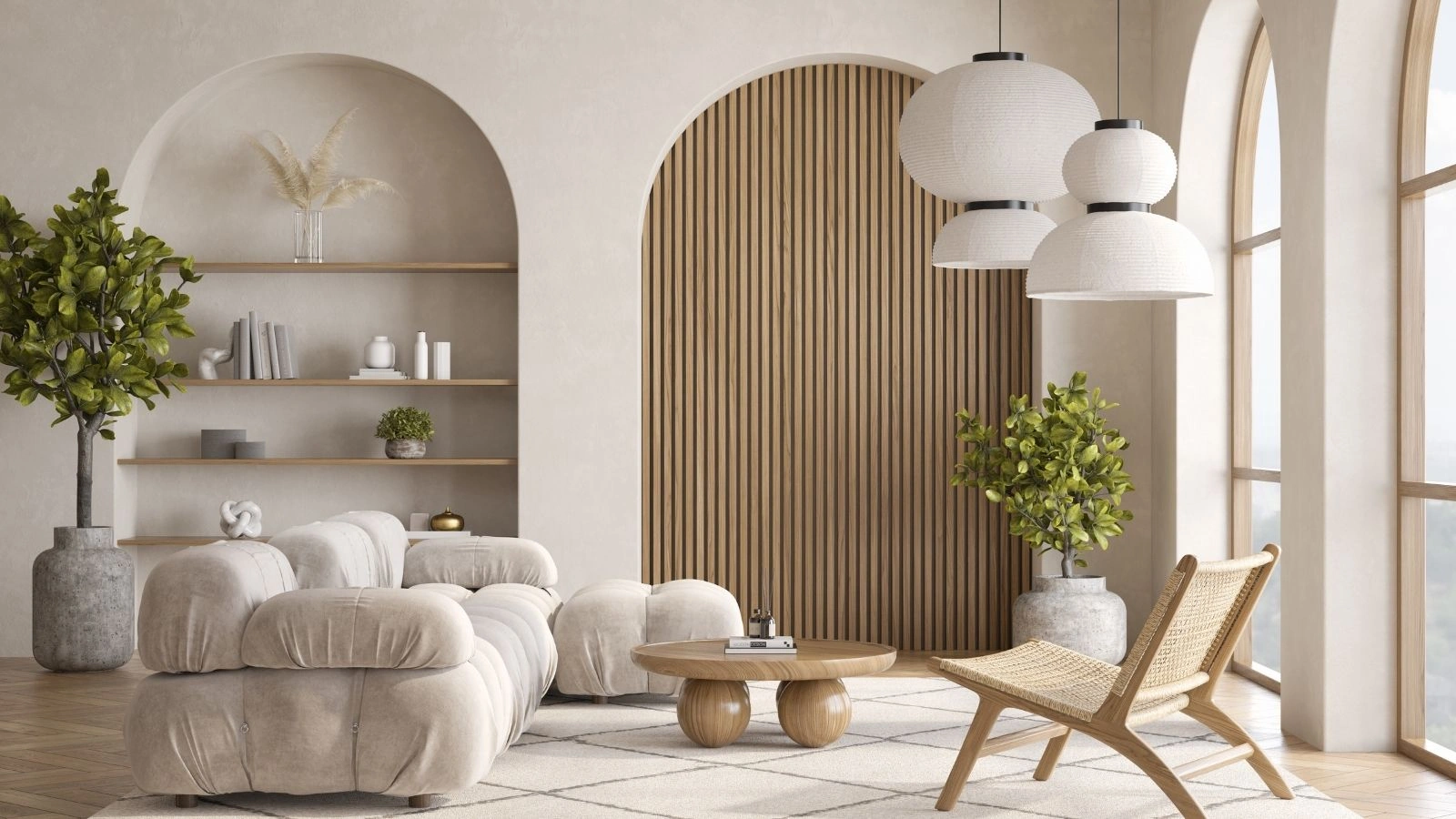
The living room is where Japandi truly comes to life. A low-profile sofa upholstered in natural fabric, a wooden coffee table, a wool or jute rug, and a single well-chosen houseplant are enough to create a peaceful and visually balanced interior.
Walls should remain light or painted in warm gray tones. Accessories should be limited to a few carefully selected ceramic or wooden decorative pieces.
Japandi Bedroom
A Japandi bedroom is all about reducing visual noise. Choose a low wooden bed frame in a darker wood finish, natural linen or cotton bedding, and a minimalist bedside table free from unnecessary decoration. Textiles in ecru, gray, or off-white reinforce the sense of calm. Avoid oversized mirrors, cluttered surfaces, and excessive accessories.
Japandi Kitchen
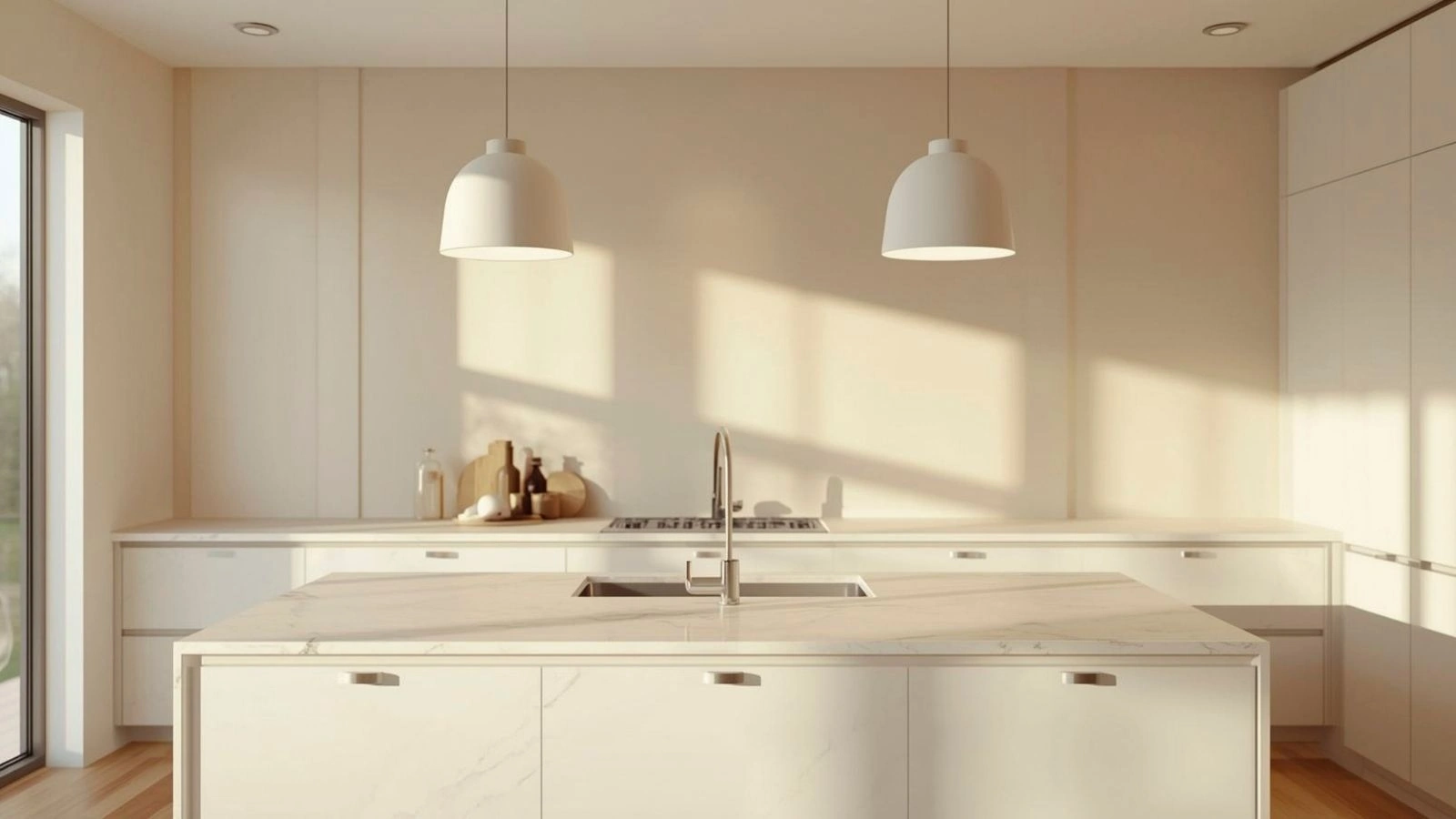
A Japandi kitchen combines functionality with understated elegance. Cabinet fronts in warm white or anthracite pair beautifully with stone or wooden countertops. Open shelves displaying ceramic tableware and glassware add lightness to the space.
Keep countertops clear of unnecessary items. Small touches, such as a handcrafted clay pitcher or a wooden cutting board, add character without creating visual clutter.
Japandi Bathroom
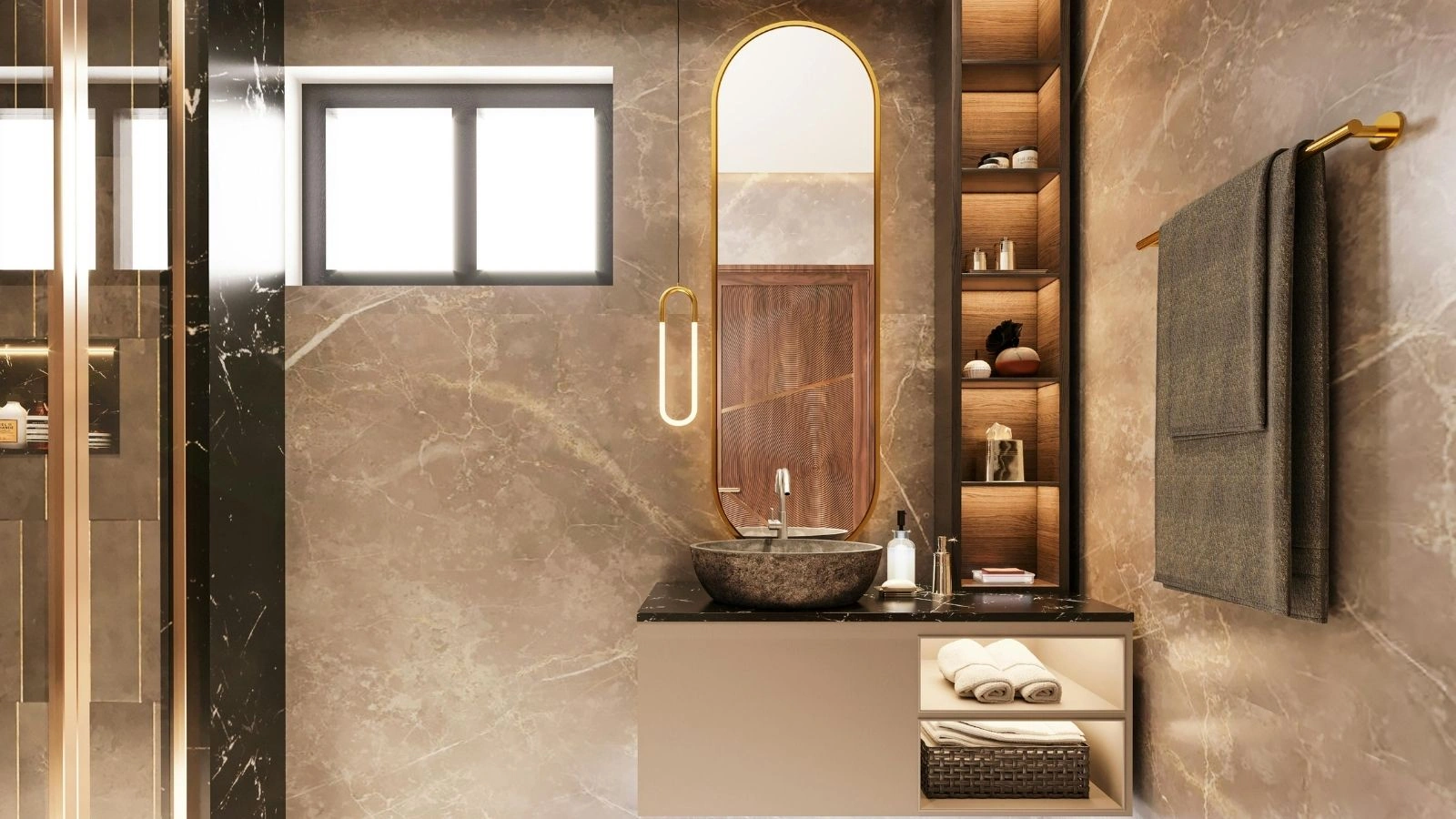
A Japandi bathroom is designed as a place of relaxation. Stone or terrazzo surfaces are complemented by wooden accessories such as benches, cosmetic organizers, or shower mats.
Instead of bright white, opt for warmer shades of beige or gray. Plants like ferns or peace lilies soften the space and reflect the Japanese appreciation of nature.
Japandi Compared to Other Interior Design Styles
Japandi interiors are often confused with Scandinavian minimalism or the wabi-sabi style, but there are important differences.
Scandinavian interiors tend to be brighter and cozier, relying heavily on white walls and light wood finishes. Japandi is more subdued, featuring darker tones and a more restrained material palette.
The wabi-sabi philosophy celebrates imperfection and transience. Japandi draws inspiration from these ideas but presents them in a more structured, contemporary, and functional way. Furniture is intentionally designed rather than rustic or improvised, and every element has a clear purpose.
If you're wondering how much it costs to finish an apartment in the Japandi style, keep in mind that choosing natural materials and minimalist furniture doesn't necessarily mean a higher budget. The key lies in careful selection rather than the number of items.
By choosing J.W. Construction's turnkey interior finishing service, you can be confident that this refined aesthetic will be executed with uncompromising attention to detail. The company's experienced interior designers will manage the entire process from start to finish.
FAQ – Frequently Asked Questions
What is the Japandi style?
Japandi is an interior design style that combines Japanese minimalism with Scandinavian aesthetics. It is characterized by natural colors, simple furniture, organic materials, and a limited number of decorative elements.
Which colors dominate the Japandi style?
Japandi interiors feature muted tones such as beige, ecru, warm gray, muted green, and black used as an accent. Bright, saturated colors are generally avoided.
How do you decorate a Japandi interior?
Keep furniture and decorations to the essentials. Choose natural materials, low-profile furniture with clean lines, and a subdued color palette to create a harmonious, functional living space.
What flooring works best in Japandi interiors?
Dark wood flooring, such as walnut or oak, is the most popular choice, along with natural stone or concrete. Floors should have a matte finish and maintain a natural appearance.