24.05.2026 - Testowa
Primary Market – What Is It? Differences Between the Primary and Secondary Real Estate Markets
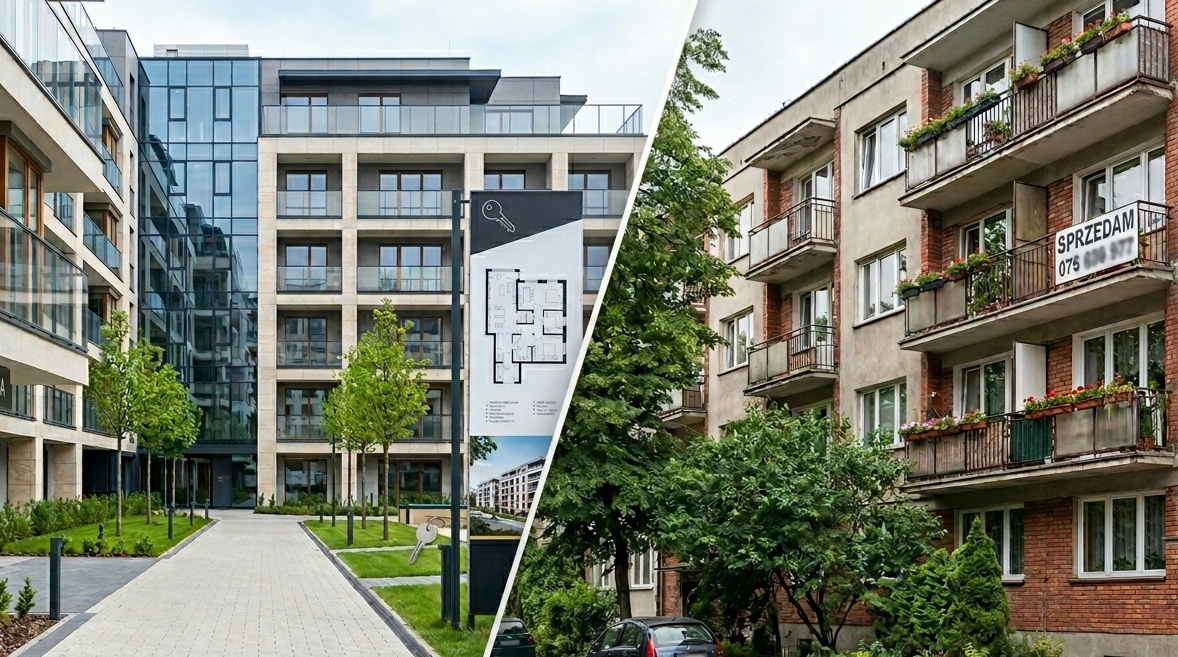
What Is the Primary Real Estate Market?
The primary market is the segment of the real estate market where you buy a property directly from a developer or housing cooperative. The property is brand new and has never had a previous owner. The transaction is based on a developer agreement, and buyers often purchase the apartment while it is still under construction or shortly after completion.
It is worth knowing that apartments on the primary market are usually sold in a developer-standard condition. This means the interiors are unfinished: no flooring, tiles, painted walls, or bathroom fixtures. You can arrange the space exactly the way you want.
Before collecting the keys, carefully inspect the condition of the apartment. You can find a comprehensive checklist in the guide on what to look for during an apartment handover from a developer.
The Secondary Market – What Is It and Who Is It For?
The secondary market includes apartments that have previously been owned by a private individual. You can buy a property from an individual, entrepreneur, or company that previously used the property. The apartment may be a few years old or several decades old — the key factor is that it does not come directly from the developer.
Transactions on the secondary market are finalized before a notary through a notarial deed transferring ownership. You purchase the property with its current legal and technical status, which should be carefully verified before signing the agreement. Before choosing a specific offer, it is important to check the credibility of the transaction parties. Just as on the primary market it is crucial to know how to verify a developer in the National Court Register (KRS), on the secondary market you should thoroughly verify the owner’s identity and the entries in the land and mortgage register.
Primary vs. Secondary Market – The Most Important Differences
The two markets differ in many respects. The table below summarizes the most important factors worth considering before making a decision.
Criterion | Primary Market | Secondary Market |
| Seller | Developer or housing cooperative | Private owner or company |
| Property condition | New, usually unfinished | Used, often ready to move in |
| Move-in timeline | After construction completion | Usually shortly after purchase |
| Warranty | Yes, mandatory (5 years) | Limited or none |
| PCC tax | None (buyer pays VAT) | 2% of the property value |
| Interior customization | Full freedom | Depends on the property condition |
Advantages and Disadvantages of the Primary Market
Buying an apartment on the primary market comes with clear benefits, but also some limitations. Before signing a developer agreement, it is worth understanding both sides of the decision.
Main advantages of the primary market:
- new building condition and installations,
- complete freedom to design the interior according to your needs,
- mandatory 5-year developer warranty,
- modern energy-efficient and construction solutions,
- no civil law transaction tax (PCC).
Potential disadvantages:
- the need to finish the apartment yourself, which generates additional costs,
- sometimes long waiting periods before the building is completed,
- uncertainty regarding the final appearance of the neighborhood and infrastructure,
- higher price per square meter compared to the secondary market in the same location.
Advantages and Disadvantages of the Secondary Market
The secondary market mainly attracts people who want to move into a new home quickly without getting involved in extensive finishing works. Second-hand properties are often located in attractive, well-connected areas with developed infrastructure.
Advantages of the secondary market:
- the possibility of moving in shortly after completing the transaction,
- a wider selection of locations, including city centers,
- lower purchase prices compared to new developments in the same area,
- apartments ready to move into or already finished.
Disadvantages of the secondary market:
- older electrical, plumbing, and heating systems that may require replacement,
- the obligation to pay PCC tax amounting to 2% of the property value,
- limited or no seller warranty,
- possible debts or legal encumbrances requiring verification.
Primary and Secondary Markets vs. Mortgage Loans
Financing a property purchase with a mortgage is possible on both markets, but the procedures differ. When buying on the primary market, the bank often releases funds in installments according to the construction schedule. For some time, the buyer pays only interest on the released tranches rather than full principal-and-interest installments.
In the case of the secondary market, the bank values the property based on its current technical condition and market value. The mortgage process is usually faster because the property already exists and can be directly assessed.
However, remember that on the secondary market, PCC tax is added to the purchase costs, which increases the total expense.
How to Choose the Right Option?
The choice between the primary and secondary markets depends on your priorities, financial situation, and planned move-in date. If you value a brand-new apartment, modern solutions, and the possibility of designing the space from scratch, the primary market may be the better choice. If you need quick access to a home and appreciate established locations, the secondary market may suit you better.
Regardless of your decision, careful preparation for the transaction is essential. Verifying the developer or seller, analyzing documents, and understanding your rights as a buyer will help you avoid unnecessary problems.
FAQ – Frequently Asked Questions
What Is the Primary Market?
The primary market is the segment of the real estate market where you purchase a property directly from a developer or housing cooperative. The property is new and has never previously had a private owner.
When Is It the Primary Market and When Is It the Secondary Market?
A property belongs to the primary market when it comes directly from a developer or housing cooperative and has never been privately owned. The secondary market concerns properties that have previously been used and are changing owners for at least the second time.
What Is the Secondary Market?
The secondary market includes properties sold by previous private owners or companies that previously used them. These apartments may vary in age and technical condition.
What Is the Primary Market?
The primary market is the real estate market in which developers or housing cooperatives sell newly built properties for the first time. The buyer acquires the property directly from its creator, without any previous owners involved.